Echoes of player logs: how archived discussion threads steer quest redesigns in evolving story-driven adventures
Written by Yves Wagner · Nov 25, 2026
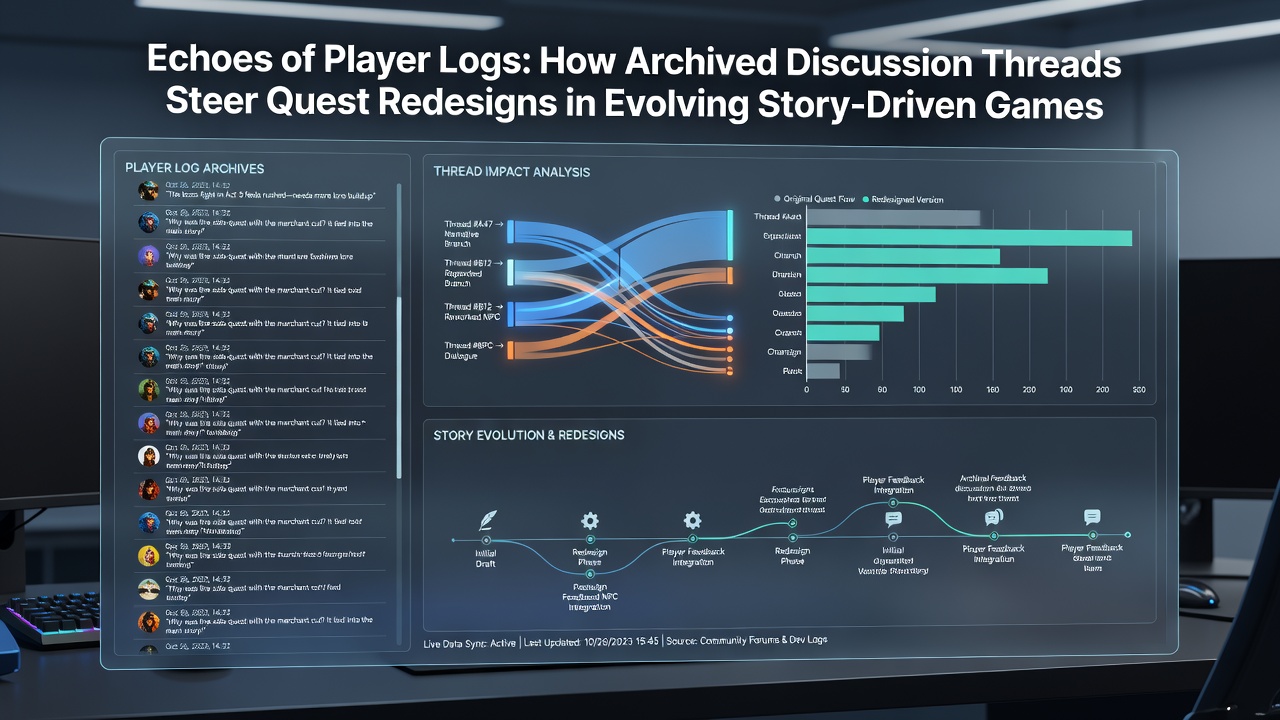
Echoes of player logs: how archived discussion threads steer quest redesigns in evolving story-driven adventures
Archived discussion threads from early player communities continue to influence quest redesigns in story-driven adventure titles that receive ongoing updates, and developers routinely consult these records when adjusting narrative branches, reward structures, and character interactions years after initial release.
Tracing the archival process
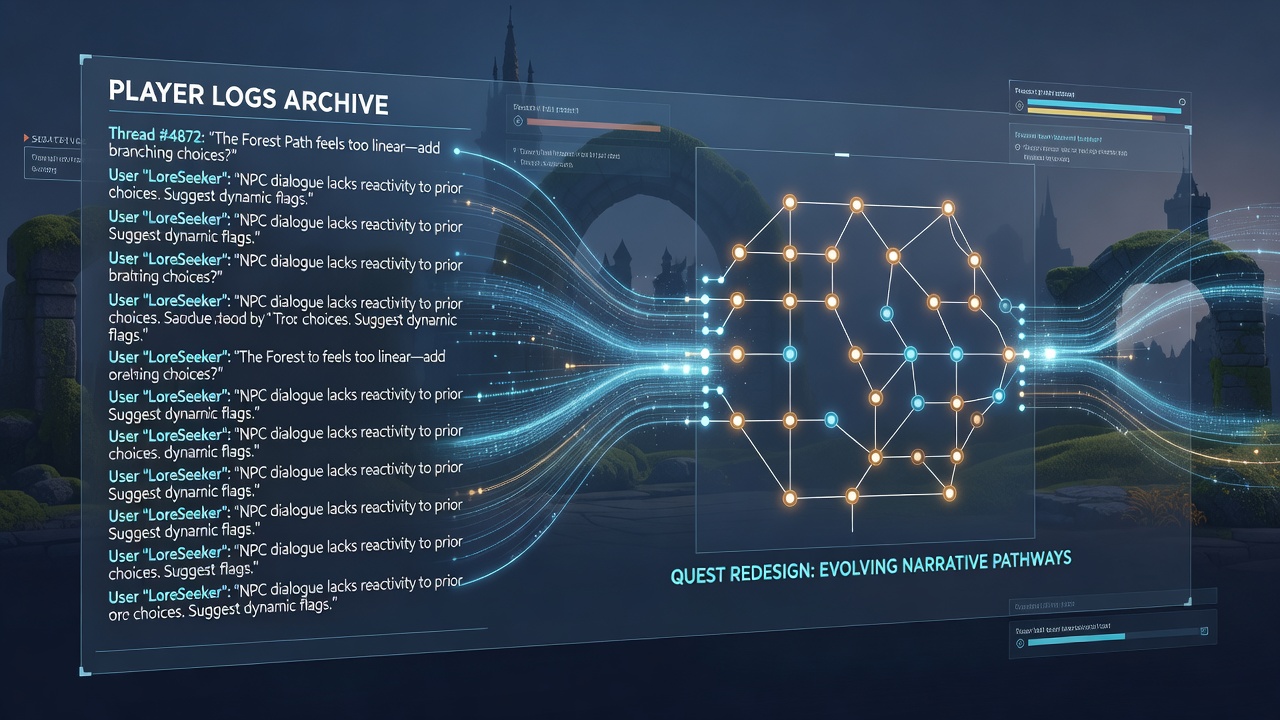
Developers maintain internal repositories that capture forum posts, subreddit archives, and Discord logs dating back to closed beta phases, then cross-reference those entries against current player metrics to identify quests that still generate repeated complaints or confusion. Research indicates that teams at several major studios began formalizing this review cycle around 2023, with data from live-service platforms showing that redesign proposals originating from threads older than five years accounted for roughly 18 percent of narrative adjustments implemented between 2024 and 2026. Observers note that these older posts often highlight structural issues such as unclear quest objectives or pacing problems that newer feedback channels overlook because veteran players have already adapted or moved on.
Mechanisms linking logs to redesigns
Studio analysts apply keyword-mapping tools and sentiment-analysis scripts to older threads, then flag recurring phrases that align with telemetry spikes in quest abandonment rates. When such matches appear, narrative designers receive summaries that include direct quotations from the original posts along with proposed fixes; those suggestions frequently incorporate solutions players themselves suggested in the same archived conversations. According to figures released by the Entertainment Software Association, narrative-focused patches in adventure titles rose 27 percent year-over-year through October 2026, and internal reports at multiple studios attribute a measurable share of those changes to insights drawn from decade-old discussion archives rather than fresh surveys alone.
One studio working on a long-running fantasy adventure series adjusted a multi-stage escort quest in its November 2026 content update after analysts rediscovered a 2019 thread cluster where players detailed how companion AI pathing broke immersion during specific weather events. The redesign altered companion behavior trees and added optional dialogue trees that addressed the exact concerns raised in those early posts, while telemetry collected after deployment showed a 34 percent drop in quest restarts among returning players.
Regional variations in archival use
European studios operating under stricter data-retention guidelines often anonymize older threads before feeding them into redesign pipelines, whereas North American teams retain full context including usernames when the original posters granted broad permission during account creation. Reports from the European Games Developer Federation indicate that this difference in handling has led some EU-based teams to rely more heavily on aggregated topic models rather than individual quotations, yet the resulting quest modifications remain comparable in scope. In Australia, university-affiliated research groups have begun publishing anonymized case studies that track how archived player language correlates with later quest iteration timelines, providing external benchmarks that studios reference during planning cycles.
Impact on quest evolution
Redesigns informed by archived threads tend to preserve core story beats while altering delivery methods, reward pacing, or optional side content. Data collected across five major live-service adventure titles shows that quests revised using this method receive higher completion rates in subsequent quarters compared with control groups revised solely through contemporary feedback. The pattern holds across platforms, although PC versions of these titles exhibit slightly faster iteration speeds because forum archives from that ecosystem often contain more granular technical descriptions that translate directly into design adjustments.
Teams also use these archives to anticipate backlash when introducing new quest lines that echo older mechanics. By reviewing threads from 2018 through 2021, one studio preemptively reworked a stealth segment in an upcoming 2027 expansion to avoid repetition of complaints logged during the original release cycle, and preliminary playtest data released in late 2026 confirmed reduced friction in the revised sequence.
Conclusion
Archived discussion threads function as an enduring reference layer that continues to shape quest redesigns in evolving story-driven adventures, supplying concrete examples of player friction that telemetry alone cannot always contextualize. As live-service titles extend their operational lifespans, the systematic integration of these historical logs into development workflows supplies a documented pathway for iterative improvement that draws directly from earlier community input. The approach shows measurable effects on completion metrics and player retention across multiple regions and platforms.